Introduction
What if you could earn in dollars, build a thriving business from your home in Lagos, Abuja, or Port Harcourt, and never have to worry about managing inventory? Welcome to dropshipping, the business model that’s transforming how Nigerians make money online in 2025.
The global dropshipping market reached $435 billion in 2025, representing a 23.6% increase from the previous year, and Nigeria is riding this wave. With internet penetration projected to reach 70% by 2025 and a booming e-commerce sector, there’s never been a better time to start dropshipping in Nigeria.
But here’s the part most guides overlook. The biggest challenge Nigerian entrepreneurs face isn’t choosing a product or setting up a store. It’s getting paid in dollars and managing international transactions without losing half of their profits to fees and terrible exchange rates.
Below, we’ll show you exactly how to start a dropshipping business in Nigeria from scratch, plus how Cleva solves the payment headaches that stop most people before they even begin.
Now let’s start with the basics.
What is Dropshipping?
What is dropshipping business, and why is everyone talking about it?
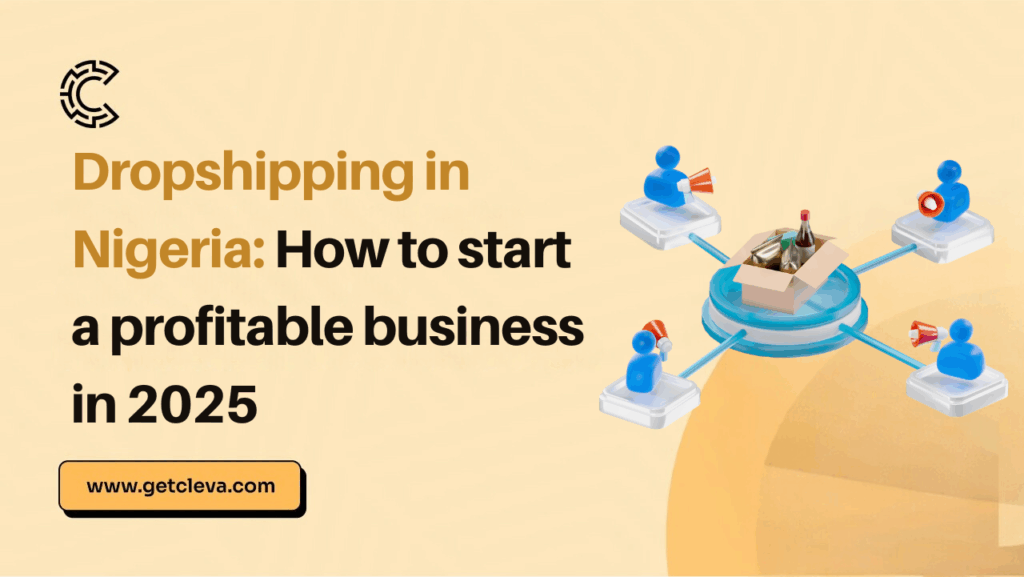
Dropshipping is a retail business model where you sell products without ever holding inventory. Here’s how it works:
- You set up an online store and list products from suppliers
- A customer buys from your store
- You forward the order to your supplier (often based in China, the US, or Europe)
- The supplier ships the product directly to your customer
- You keep the profit (the difference between what the customer paid and what the supplier charged)
The beauty of dropshipping? You never touch the product. No warehouse rent, no inventory costs, no shipping logistics. You’re essentially the middleman connecting customers with products they want.
Think of it this way. If traditional retail is like owning a restaurant where you cook and serve food, dropshipping is like running a food delivery app. You facilitate the transaction, but someone else handles the heavy lifting.
Why dropshipping works so well in Nigeria right now
Nigeria’s digital economy is exploding and dropshippers are perfectly positioned to benefit. Here’s why:
- The numbers don’t lie
Nigeria’s e-commerce market is projected to reach ₦15.4 trillion by 2025, and a huge chunk of that growth is coming from small entrepreneurs and side hustlers just like you. Plus, Nigeria ranks among the top five countries globally showing the highest interest in dropshipping, right alongside Pakistan, Sri Lanka, Morocco, and Nepal.
- Low startup costs
Unlike traditional businesses that require millions in naira for inventory, rent, and equipment, you can start a dropshipping business with as little as ₦50,000 to ₦100,000. That covers your website setup, initial marketing, and a few test orders.
- Perfect for side hustles
Working a 9-to-5? No problem. Dropshipping is flexible enough to run in your spare time. Many successful Nigerian dropshippers started while keeping their day jobs.
- Access to global products
Through platforms like AliExpress and Alibaba, you can offer Nigerian customers products they can’t easily find locally, from phone accessories to fitness equipment to home decor.
- The dollar advantage
Here’s the real kicker. When you dropship, you’re often earning in dollars (or can price in dollars) while your operational costs remain in naira. With the naira’s volatility, this built-in currency advantage can significantly boost your profit margins.
The steps to launching a profitable dropshipping business
Step 1: Choose Your Niche and Products (The Foundation of Your Dropshipping Business)
This is where most beginners either win big or waste months spinning their wheels. Your niche, the specific category of products you focus on, determines everything: your profit margins, your marketing costs, and ultimately, whether your business succeeds.
How to pick a winning niche
Don’t just chase what’s trending on TikTok. Use this three-question framework:
1. Is there proven demand in Nigeria?
Use Google Trends to see if Nigerians are actively searching for products in this category. Check Instagram and see if local influencers are promoting similar items. Browse Jumia and Konga to see what’s selling.
2. Can you make decent profit margins?
Look for products you can buy for $5-$15 and sell for $20-$50. Anything less and the margins are too thin. Anything more and you’ll struggle with trust issues (Nigerians are understandably skeptical of expensive items from unknown stores).
3. Is shipping straightforward?
Avoid fragile, oversized, or restricted items for your first store. Stick to lightweight, durable products that won’t break during international shipping.
Hot Dropshipping Niches in Nigeria for 2025
Based on current market research and what’s actually selling, here are the top niches:
- Fashion Accessories: Phone cases, jewelry, watches, sunglasses, bags. The fashion segment is growing at a compound annual growth rate of 26.4%.
- Beauty and Personal Care: Skincare tools, makeup brushes, hair accessories, grooming kits.
- Home and Kitchen: Organizers, LED lights, kitchen gadgets, home decor items.
- Tech Accessories: Wireless earbuds, phone holders, charging cables, portable chargers.
- Fitness and Wellness: Resistance bands, yoga mats, smart water bottles, fitness trackers.
- Baby Products: The global baby care market is projected to grow from $250 billion in 2025 to more than $419 billion by 2032, making this a lucrative long-term niche.
A major hack in picking a profitable niche is to look for products with 100+ reviews on AliExpress and 4+ star ratings. This indicates proven demand and reliable quality.
Step 2: Find Reliable Dropshipping Suppliers
Your supplier makes or breaks your business. Let’s get this right from the start.
Top Dropshipping Suppliers for Nigerian Entrepreneurs
- AliExpress (Best for Beginners)
AliExpress is the go-to platform with over 100 million products, competitive prices, and ePacket shipping to Nigeria.
Look for:
- Suppliers with 95%+ positive feedback
- Products with 4+ stars and 100+ orders
- Shipping times to Nigeria (typically 15-30 days)
- CJ Dropshipping
Offers faster shipping and sometimes better prices than AliExpress. They have warehouses in multiple countries and offer product sourcing services.
- Alibaba (For Bulk Orders)
Once you validate a product and want better margins, Alibaba connects you with manufacturers. Higher minimum orders but better profits.
- Local Nigerian Suppliers
Don’t overlook platforms like Jiji or WhatsApp supplier groups. Benefits include faster shipping, lower costs, and supporting local businesses.
Step 3: Build Your Online Store
Time to bring your dropshipping business to life.
Best Platforms for Nigerian Dropshippers
- Shopify (Most Popular): Industry standard, user-friendly, integrates with AliExpress. Costs $29/month.
- WooCommerce (Most Affordable): Free WordPress plugin, more hands-on but lower monthly costs (₦5,000-₦15,000/month for hosting).
- Instagram and WhatsApp (Easiest Start): Zero setup costs. Many successful Nigerian dropshippers start here, posting on Instagram and taking orders via WhatsApp.
Essential Elements of Your Store
Whatever platform you choose, include:
- High-quality product photos
- Detailed descriptions addressing Nigerian customers’ concerns
- Trust signals (contact info, return policy, testimonials)
- Mobile optimization (most Nigerians browse on phones)
- Simple checkout process
Before launching, get the Cleva mobile app ready. You’ll need it to manage international payments seamlessly.
Step 4: Set Up Your Payment System (This Is Where Most Nigerian Dropshippers Fail)
Here’s the brutal truth. You can pick the perfect niche, find winning products, and build a beautiful website, but if you can’t get paid properly, your business will collapse before it even takes off. Payments are the backbone of dropshipping, yet this is where most Nigerians lose the most money.
The typical dropshipping cycle is simple on paper. A customer pays you in naira through Paystack, Flutterwave, or bank transfer. You then need to pay your supplier in dollars through AliExpress, PayPal, or direct bank transfers. Somewhere in between, you have to convert naira to dollars at a decent rate, and eventually withdraw your profits back into your Nigerian account. Each of these steps can quietly drain your margins if you’re not smart about how you handle payments.
The Traditional (Expensive) Way
Most beginners unknowingly take the costliest route. They receive payments in naira, rely on their regular bank to convert that naira into dollars at terrible exchange rates, and sometimes lose up to 5–10 percent of the entire amount before the money even reaches the supplier. International transfers come with high SWIFT fees and slow processing times, often taking 3–5 days to clear. By the time everything is done, a simple ₦50,000 profit can drop to ₦42,000. That’s ₦8,000 gone for no good reason.
Why Cleva Works Perfectly for Dropshippers
Cleva removes the biggest financial headaches Nigerian dropshippers face. Instead of dealing with bad exchange rates, delayed transfers, or restricted payment options, Cleva gives you a smooth and profitable way to collect money, convert funds, and pay suppliers. You also get an actual US dollar account in your name, which offers better trust, more control, and easier compatibility with international platforms.
Benefits of using Cleva as a dropshipper
- You get your own individual US dollar account
- Competitive USD to NGN rates that help you avoid losing 5 to 10 percent on conversions
- Free deposits if you receive money through USDC or USDT
- Fast conversions so you can pay suppliers within minutes
- A simple 0.8 percent fee capped at $10, no matter the amount
- Reliable access to your funds without delays or hidden charges
Setting Up Payments with Cleva
Here’s your action plan:
- Sign up for Cleva: Create your account at www.getcleva.com (takes about 5 minutes).
- Complete your KYC: Verification is fast and entirely online.
- Get your USD account details: Use these to receive payments from international clients or platforms.
- Set up your naira payment gateway: Use Paystack or Flutterwave to collect payments from Nigerian customers.
- Create your payment workflow:
Customer pays in naira → you convert naira to USD using Cleva → pay your AliExpress supplier → hold profits in USD or convert to naira when the rate is favorable.
Want to take action immediately? Download the Cleva app and set up your USD account while you continue reading.
Step 5: Master shipping and delivery
Shipping is where your business earns trust, but it can also cause delays if not managed well. Be transparent with customers about delivery times: international suppliers usually take 15–30 days (or 7–15 days with express), while local suppliers deliver in 1–3 days in Lagos and 3–7 days for other states. Always add 3–5 extra days as a buffer.
For international shipments, AliExpress Standard Shipping is cheap but slow, ePacket is faster and comes with tracking, and DHL/FedEx is the quickest but most expensive. Small shipments under $50–$100 generally clear customs without issues, but it’s good to inform customers about possible delays.
Track every order and communicate consistently. Send tracking numbers immediately, check progress every 5–7 days, and use tools like AfterShip or 17Track to keep customers updated and build trust.
Step 6: Market your store, manage orders, and scale
Once your store is ready, your next focus is driving traffic and fulfilling orders efficiently. Start with simple organic marketing: post consistently on Instagram, share products on WhatsApp Status, and promote in active Facebook groups. If you have a small budget, run basic Facebook or Instagram ads and test with ₦5,000–₦10,000. Micro-influencers are also affordable and can drive strong conversions.
As orders roll in, keep your process organised. Track every order in a Google Sheet or Trello board from the moment it’s received to delivery. Always follow up for reviews, screenshots and short videos that you can use as social proof to build trust.
When sales become consistent, begin to scale thoughtfully. Add more products in your niche, consider buying small quantities in bulk for better margins, and outsource customer service once the workload grows. Tools like DSers or Oberlo can also automate parts of your fulfillment.
A smart move is to keep some profits in USD using Cleva so you can protect your earnings from naira volatility and convert only when the rate is in your favor.
Start your dropshipping journey today
Dropshipping in Nigeria isn’t a get-rich-quick scheme. It’s a real business that requires strategy, consistency, and smart financial management. But here’s the beautiful part: you don’t need millions in capital or a fancy office to start. You need a laptop, an internet connection, and the willingness to learn.
The opportunity is massive. Nigeria’s e-commerce market is projected to reach ₦15.4 trillion by 2025, and there’s more than enough room for you to build a profitable business.
Your biggest advantage? Platforms like Cleva solve the payment and currency challenges that used to stop entrepreneurs before they even started.
Download the Cleva app and take control of your financial future today. Open your USD account in minutes and start receiving payments like a pro.
Your dropshipping empire starts with one decision. Make it now.
Share this article